
A practical 2026 guide to Crete weather by season, with sea conditions, wind patterns, packing advice and the best months for beaches and boat trips.
June 27, 2026
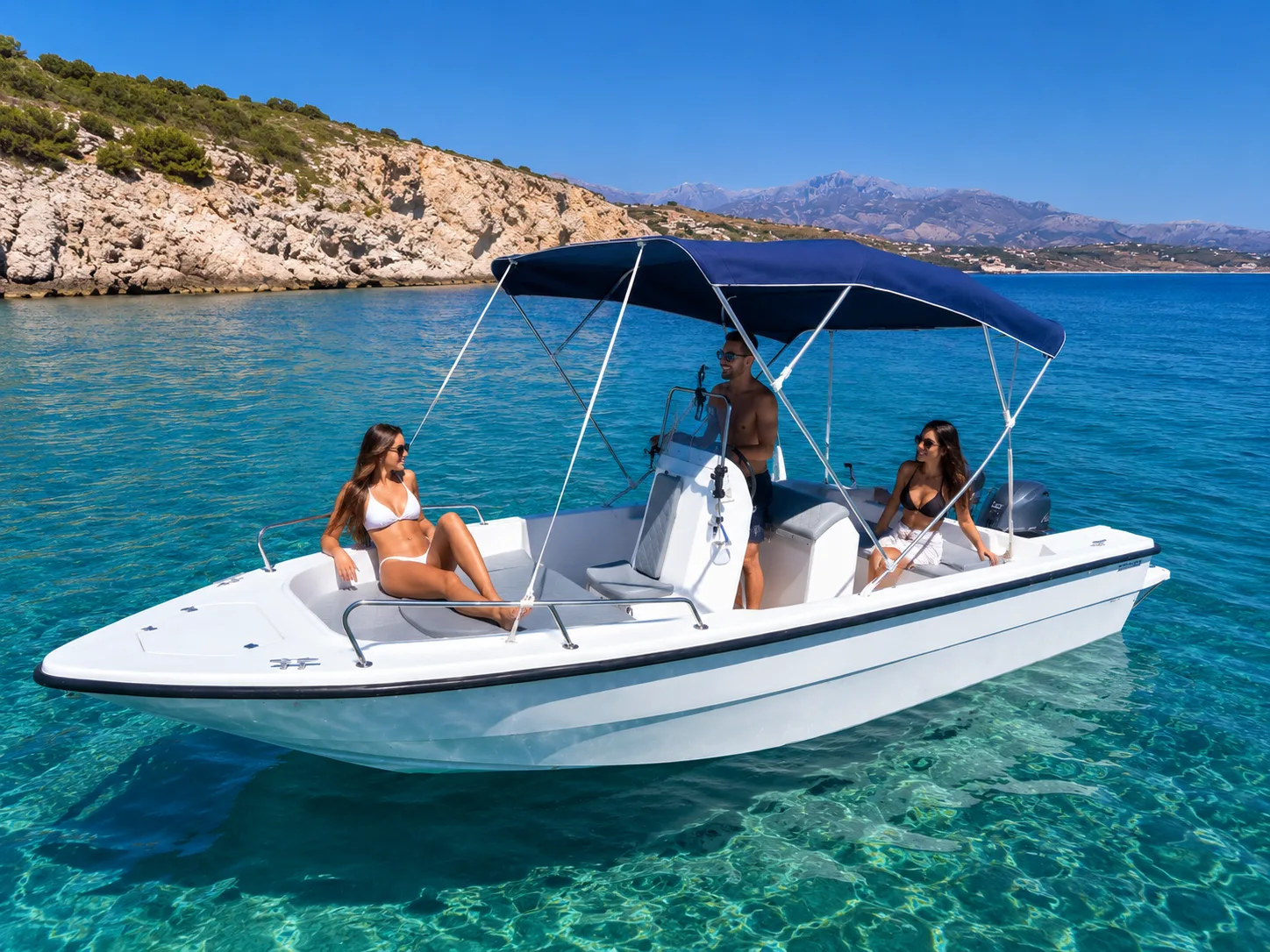
Planning to rent a boat in Crete in 2026? Learn the difference between license-free and licensed boats, where self-drive rentals make sense, what safety checks matter, and the basic navigation rules to know before you leave the harbor.
Renting a boat in Crete can be one of the easiest ways to reach quiet coves, swim in clear water and see the island from a calmer angle. It can also be confusing if you are choosing between a small license-free boat, a larger bareboat rental or a skippered private charter.
This 2026 guide explains the main options, what to check before booking, where self-drive boats work best, and the safety habits that matter on the water in Crete.
License-free boats are usually small motorboats designed for short coastal trips. They are popular with couples, families and small groups who want the freedom to stop for swimming without booking a full private cruise.
The exact limits depend on current Greek rules, the boat, the engine, the route and the operator’s insurance. Before booking, ask the rental company to confirm whether the specific boat can be driven without a license, where you are allowed to go, and what happens if the weather changes.
Best for:
Larger motorboats, higher-powered RIBs, longer bareboat routes and some offshore itineraries normally require a valid boating license. The operator may also ask about your practical experience, not only the document itself.
If you want a more capable boat but do not hold the right license, the most practical option is a skippered rental. You still get a private route and flexible swimming stops, while the captain handles navigation, anchoring, local weather judgment and harbor procedures.
Crete is large, and the sea conditions are not the same everywhere. Sheltered coastal routes around Chania, Marathi, Kolymbari, Kissamos, Agia Pelagia and parts of Elounda can be good choices when the forecast is calm and the operator keeps you within a clear route.
For Balos, Gramvousa, south-coast routes, open crossings or longer distances, ask whether a skippered charter is more appropriate. The best choice is not always the most powerful boat; it is the boat that fits the day’s wind, the route and your experience.
You do not need to become a professional navigator for a short license-free rental, but you should understand the basic collision-prevention habits usually covered in the briefing. Keep a proper lookout, travel at a controlled speed, and make early, obvious movements instead of last-second corrections.
A good rental company will walk you through the boat and the route before you leave. Do not treat this as a formality. This is where you learn how the boat handles, where the safety gear is, and what to do if you need help.
Before departure, check:
The safest rental days are usually calm mornings with a stable forecast. In Crete, afternoon wind can build quickly, especially on exposed coastlines. If the operator shortens the route, changes the departure time or cancels for safety, treat that as good judgment rather than inconvenience.
Avoid pushing into wind and chop with a small boat. It makes the ride wet, slow and tiring, and it increases fuel consumption. If conditions feel different from the briefing, turn back early while the route is still easy.
Boat rental prices in Crete vary by boat size, engine, season, duration, departure point and whether a skipper is included. Always ask what is included in the advertised price: fuel, cleaning, taxes, skipper, security deposit, cooler, snorkelling gear and port fees can be handled differently by each operator.
Read the insurance and damage policy before you sign. Pay attention to propeller damage, anchor loss, late return, route violations and weather-related cancellation terms.
Choose the simplest boat that suits your plan, not the most ambitious route on the map. For short swims and nearby coves, a license-free rental can be ideal. For Balos, Gramvousa, long coastal days or mixed weather, a licensed or skippered boat is usually the better experience.
Before you pay, confirm the license requirement, route limits, fuel policy, safety equipment and cancellation terms in writing. Once you are on the water, keep distance, respect the forecast and return early if the sea starts to change.
Sheltered coastal areas around Chania, Marathi, Kolymbari, Kissamos, Agia Pelagia and parts of Elounda can work well, depending on the day’s wind and the operator’s permitted route. For exposed crossings or longer distances, a licensed or skippered option is usually better.
Check life jackets for every passenger, fuel level, anchor, ladder, ropes, emergency phone numbers, route limits, return time, weather forecast and how to use the kill switch. Take photos of the boat condition before departure if the rental contract requires it.
They can be safe for careful beginners when the route is sheltered, the sea is calm and the operator provides a clear briefing. Stay within the approved area, keep distance from swimmers and rocks, avoid strong wind, and call the base if conditions change.
You normally need a valid boating license for larger or more powerful boats, longer routes and bareboat charters where you operate the vessel yourself. If you do not have the right license, choose a skippered rental or a private charter with a professional captain.
Yes, many operators in Crete offer license-free boats for short coastal routes, but the boat size, engine power, operating area and weather limits are controlled by local rules and the rental company. Always confirm the current requirements at booking and during the safety briefing.
No comments yet. Be the first to share your thoughts!
A practical 2026 guide to Crete weather by season, with sea conditions, wind patterns, packing advice and the best months for beaches and boat trips.
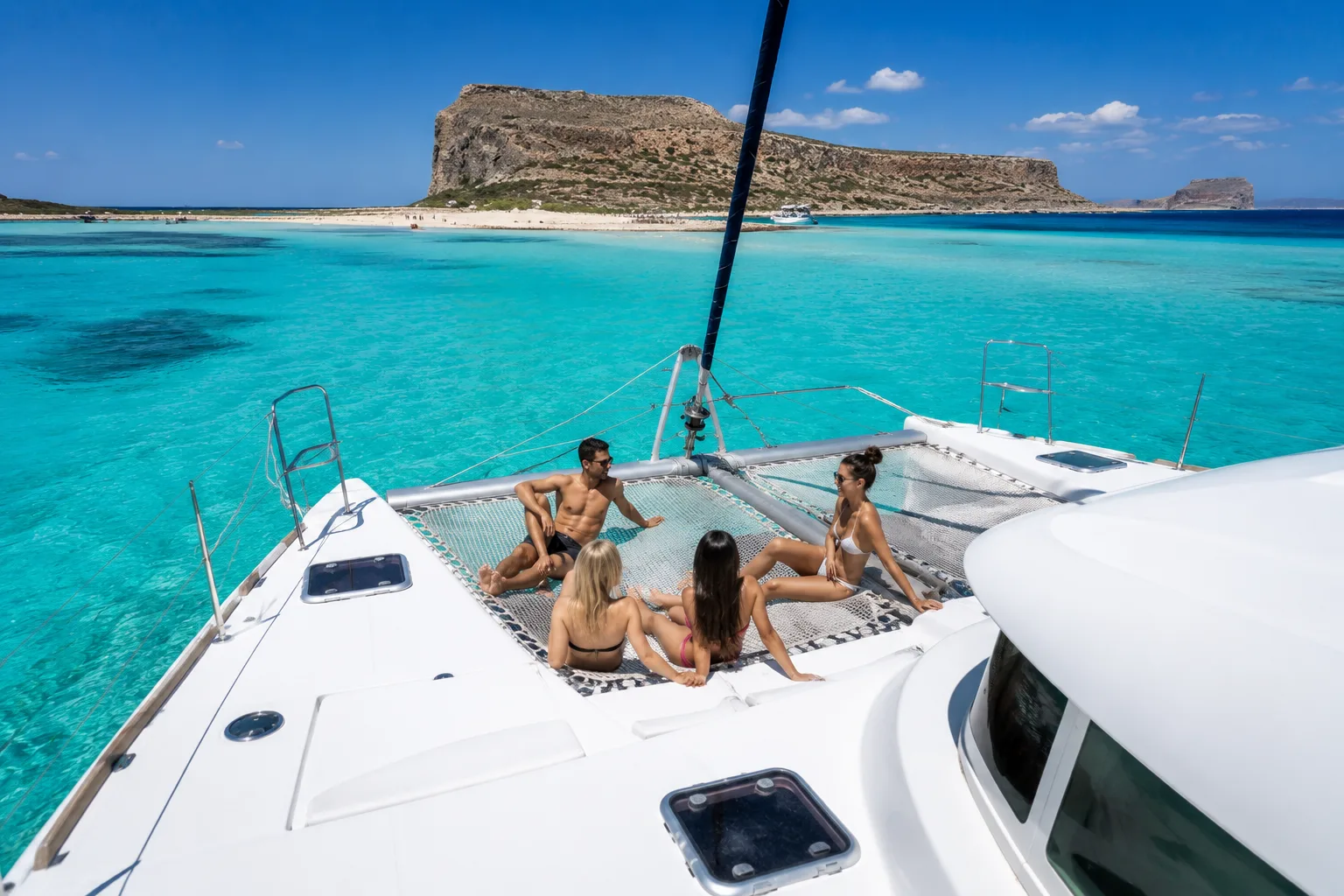
Planning a holiday in western Crete? Discover the best places to visit by boat in Chania, from the famous Balos Lagoon to secluded beaches, sea caves and hidden coastal villages only accessible from the sea.
A practical 2026 guide to Crete weather by season, with sea conditions, wind patterns, packing advice and the best months for beaches and boat trips.
Planning a holiday in western Crete? Discover the best places to visit by boat in Chania, from the famous Balos Lagoon to secluded beaches, sea caves and hidden coastal villages only accessible from the sea.
A practical 2026 guide to Crete weather by season, with sea conditions, wind patterns, packing advice and the best months for beaches and boat trips.
Planning a holiday in western Crete? Discover the best places to visit by boat in Chania, from the famous Balos Lagoon to secluded beaches, sea caves and hidden coastal villages only accessible from the sea.